Folded with one hand, baby in the other arm.
Which lightweight stroller should you choose in 2026? Our criteria (age, weight, fold, wheels, size), our advice for the city, the car and the plane, and our reference model, the Chicco Urbino stroller: approved from birth up to 22 kg, 6.3 kg and a one-hand fold.
- 6.3 kgWeight
- 0-22 kgChild
- 1 handFold
- UV50+Canopy
- From birth
- Up to 22 kg
- 6.3 kg
- One-hand fold
- Stands when folded
- Bumper bar handle
- Suspension
- Ball bearings
- UV 50+ canopy
- Water-repellent
Light in the city, gentle for baby.
The strengths of the Chicco Urbino stroller. Select one to see it in pictures.
- 6.3 kgStroller weight
- 22 kgMaximum child weight
- 0-4 yrsStated age range
- 25 cmFolded thickness
- 103 cmHeight open
- UV50+Water-repellent canopy
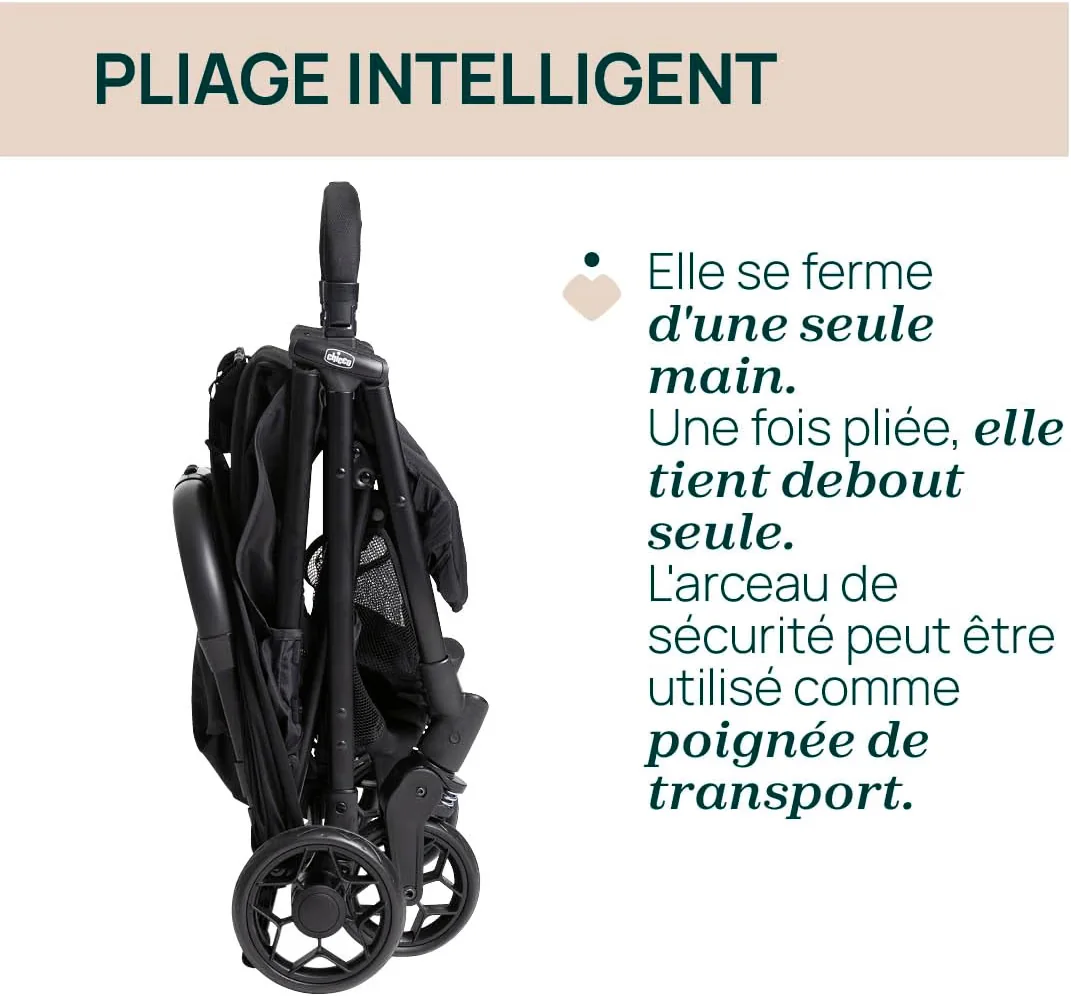
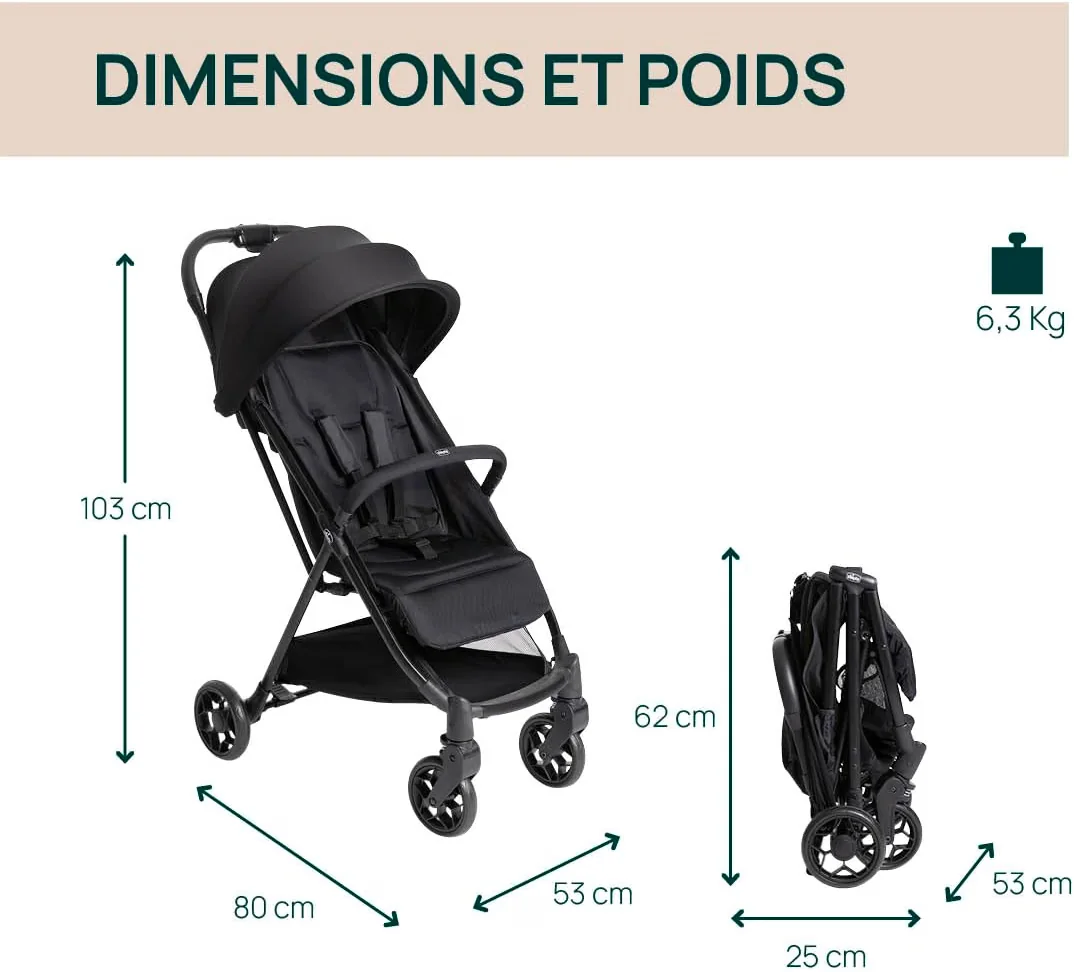
25 cm thick once folded.
- 80 x 53 x 103Open (cm)
- 62 x 53 x 25Folded (cm)
- 6.3 kgStroller weight
- 22 kgMaximum child weight
- 3 kgBasket, per a retailer
- 0+From birth
Dimensions and weight published by Chicco for the Urbino; the basket load comes from a specialist retailer’s listing. Folded, it exceeds the usual airline cabin bag size. See our guide to travelling with a lightweight stroller.
Guide contents
The essentials in 30 seconds:
- A lightweight stroller, often called an umbrella stroller or buggy, is a light, narrow pushchair designed to fold quickly and carry easily.
- Not all of them suit a newborn: for use from birth, you need a backrest that reclines almost flat and a model approved for that age.
- The right model is the one that fits your boot, your hallway and your daily life: measure before you buy.
- A “rain protection” canopy is often water-repellent, not waterproof: a rain cover is still useful.
- Our reference model: the Chicco Urbino stroller, approved from birth to 22 kg, 6.3 kg and a one-hand fold.
Comparison: the right lightweight stroller for you
There is no such thing as the best stroller in absolute terms. There is the stroller that matches your child’s age, your home, your car and your journeys. The table below sums up the main families of lightweight strollers and the profiles they suit.
| Type of stroller | Usual weight | From birth? | Fold | Who for |
|---|---|---|---|---|
| Classic umbrella stroller | Very light | Rarely, often from 6 months | Lengthwise, like an umbrella | Second stroller, back-up, short trips |
| Reclining stroller from birth (like the Urbino) | Light | Yes, if approved and the backrest goes almost flat | Compact, often one-handed | Main stroller in town, parents on the move |
| Ultra-compact “cabin” stroller | Light | Depending on model and accessories | Very small package, in several steps | Frequent flyers |
| Sturdier four-wheel city stroller | Medium | Often, sometimes with a carrycot | Compact but heavier | Town and paths, heavy use |
| Travel system (pram plus car seat) | Heavy | Yes, with a carrycot or car seat | In two parts, bulky | First months, frequent car use, countryside |
If you are looking for a light stroller that works from the maternity ward and stays with you until your child is 4, the second row is yours. That is the category where we place the Chicco Urbino. If your priority is moving a sleeping newborn from the car to a walk without waking them, look instead at a travel system compatible with an infant car seat. Our umbrella or compact comparison explains these differences.
What is an umbrella stroller?
The name comes from the shape of the first folding strollers: two curved handles like the crook of an umbrella, and a thin frame that folds lengthwise. These models weighed little, tucked into a corner and suited children who could sit up. People often bought them as a second stroller, for holidays or for the childminder’s car.
Today the term covers all light, compact strollers, even when they no longer have hooked handles. Most have a single handlebar, a book-style or three-step fold, and some recline far enough to take a newborn. They keep what makes the umbrella stroller worthwhile: limited weight, a small folded size and easy handling in narrow streets.
What sets them apart from a “classic” pushchair is the pursuit of lightness. A travel system offers a carrycot, generous suspension and a large basket, at the cost of much greater weight and bulk. The lightweight stroller does the opposite: it gives up some of that comfort to become the thing you take everywhere without thinking.
Our pick: the Chicco Urbino stroller
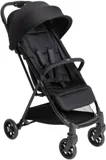
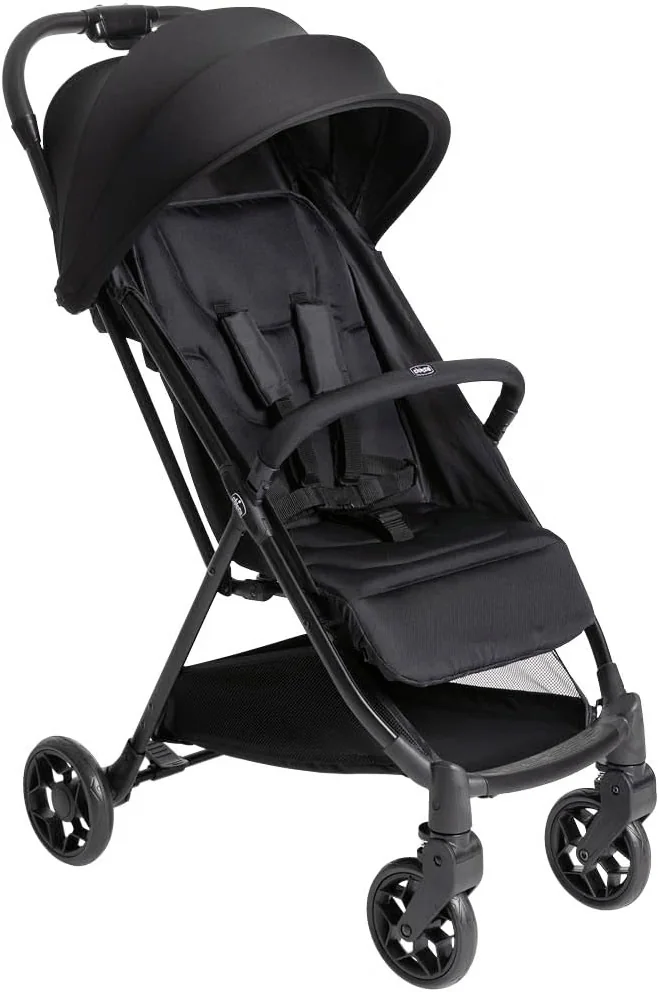
Among lightweight strollers, we chose the Chicco Urbino as our reference model. It ticks the boxes that matter most for an everyday lightweight stroller, without claiming to do everything.
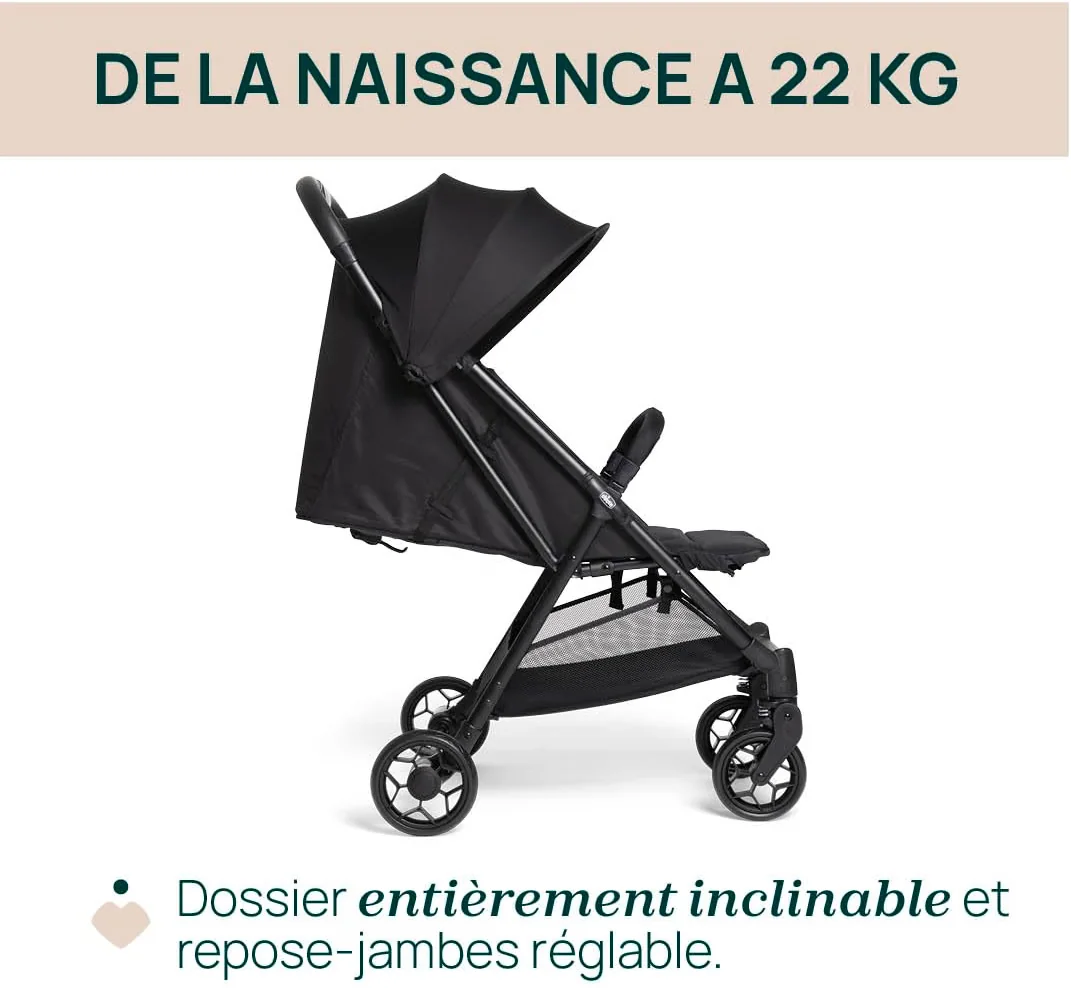
- From birth: Chicco states it is approved from birth to 22 kg, about 4 years, thanks to a fully reclining backrest and an adjustable leg rest.
- Light: 6.3 kg according to the manufacturer, without the child or the bags.
- One-hand fold: it closes with one hand and stands up on its own once folded. The safety bumper bar then doubles as a carry handle.
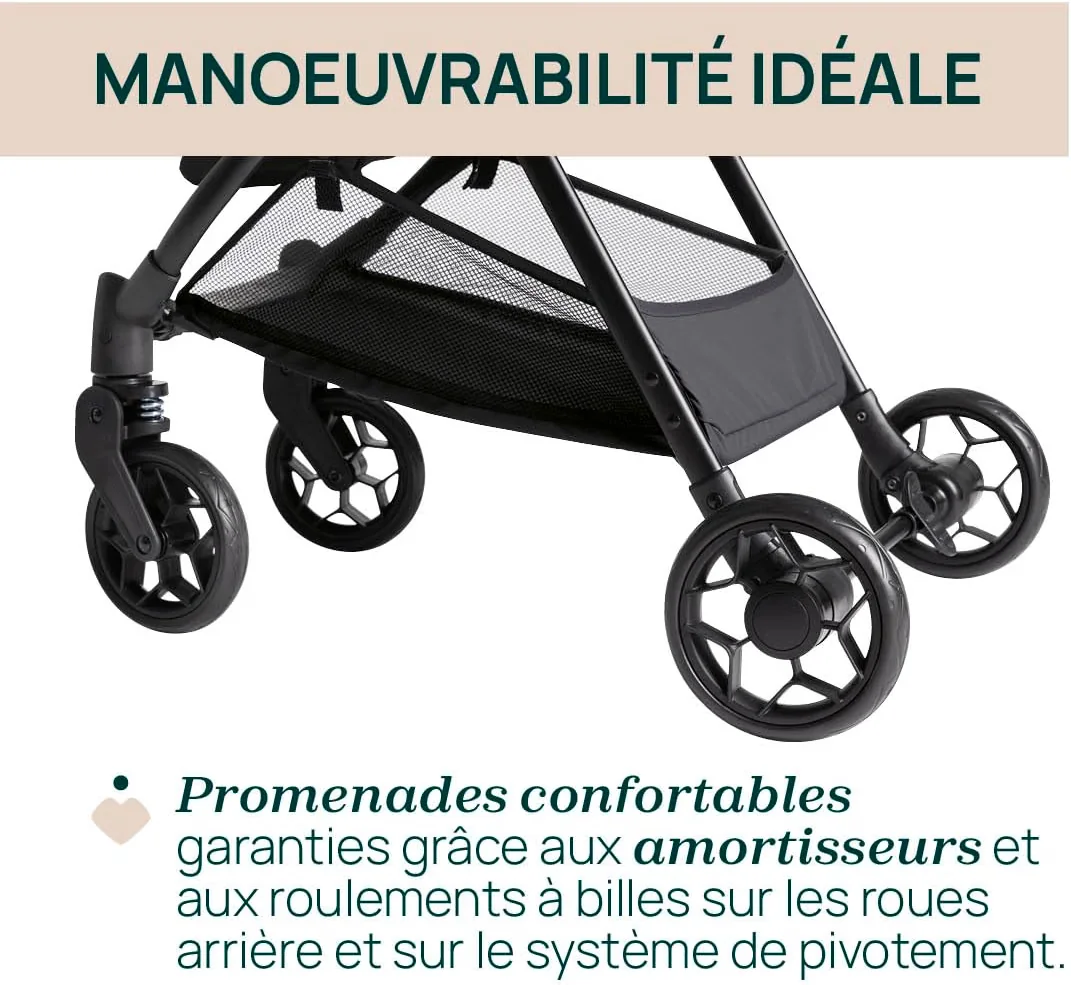
- Cushioned wheels: shock absorbers, ball bearings on the rear wheels and the swivel system, and front wheels that lock for unpaved paths.
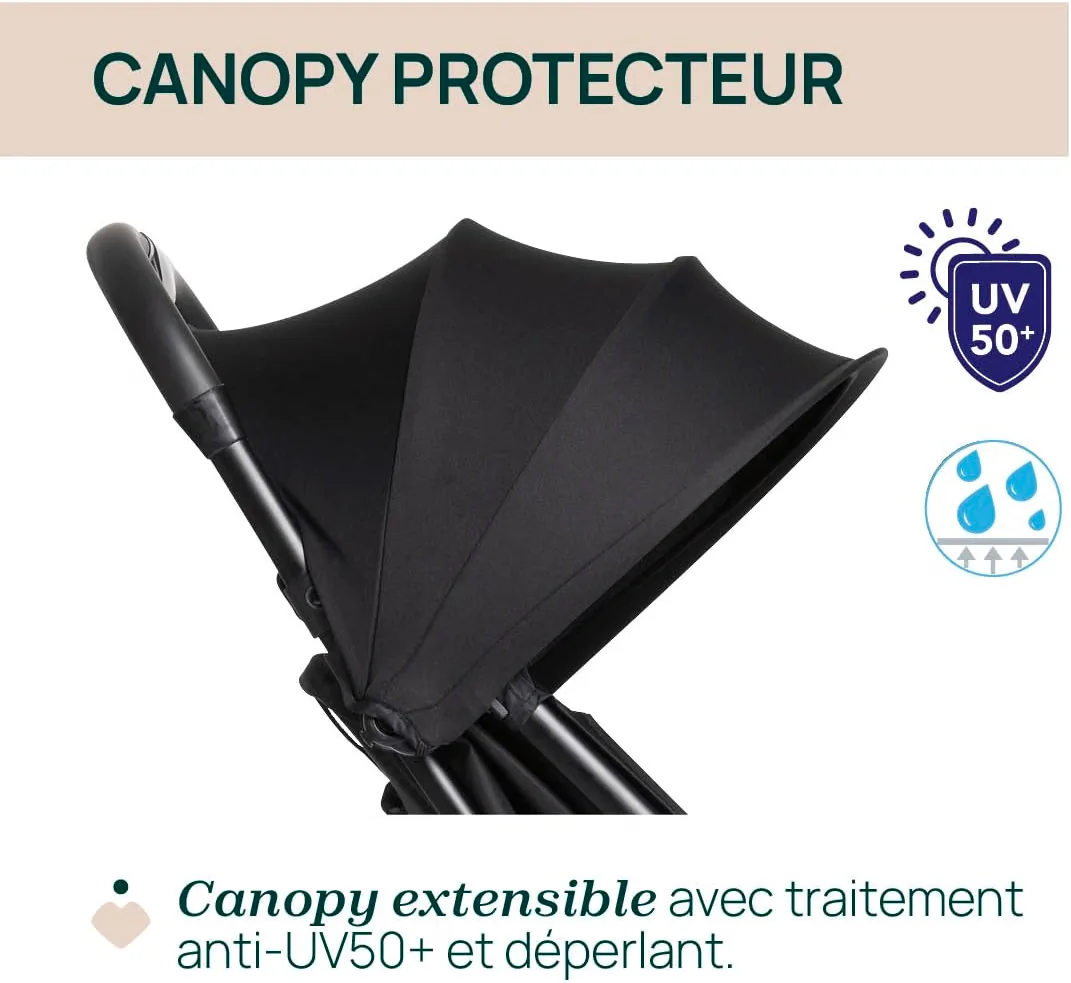
- Protective canopy: extendable, treated for UV 50+ and water-repellent.
- Size: open 80 x 53 x 103 cm, folded 62 x 53 x 25 cm, according to Chicco.
It also has its limits, which we detail in our full review: a handlebar that is not height-adjustable, no compatibility with infant car seats, a rain cover that the retailers we checked do not list among the accessories, and a folded size that exceeds the usual airline cabin bag.
From birth or from 6 months?
This is the first question to ask, and it rules out many models. A newborn cannot hold its head up and should not be seated upright. To carry one, a stroller must recline almost flat. The European standard for pushchairs, EN 1888, requires a minimum angle of 150° between the seat and the backrest for use from birth, as several manufacturers point out in their documentation.
Many classic umbrella strollers do not recline that far, so they are only intended from 6 months, when the child starts to sit up. The French consumer association UFC-Que Choisir notes in its buying guide that some so-called “second stage” strollers only accept children from 6 months. Always check the minimum age on the instructions and the label, not just the product photo.
The Urbino is one of the models stated as suitable from birth: its backrest reclines fully and its leg rest lifts to form an almost continuous surface. For its US version, Chicco gives a backrest range of 115° to 155°; the European version is approved from birth to 22 kg. Our article lightweight stroller from birth explains how to check these points and how to settle a tiny baby.
Umbrella, compact, city or travel system?
Nursery shops mix up the names. To find your way, it is better to think in terms of use than of brand labels.
The classic umbrella stroller
Very light, it folds lengthwise and stores easily. Its seat is often simpler, its recline limited and its wheels small. It works as a second stroller for a child who already walks a little, for the grandparents’ car or for holidays.
The reclining stroller, from birth
This is the Urbino’s category. It keeps the weight and size of an umbrella stroller, but adds a backrest that lies back, better-suspended wheels and a generous canopy. For many city families, it can be the only stroller.
The compact “cabin” stroller
It bets everything on its folded size, to fit in an aircraft’s overhead locker. The fold sometimes takes several movements, and the wheels are often small. It mainly interests families who fly often.
The sturdy city stroller and the travel system
Heavier, they offer a carrycot or an adaptable car seat, large wheels and a big basket. They shine in the first months and in the countryside, much less on a staircase with no lift or in a small boot.
10 criteria for a good lightweight stroller
- Minimum age and maximum weight. From birth or from 6 months, and up to what child weight: the approval is what counts.
- Backrest recline. Almost flat for a newborn, easy to adjust for an older child’s nap.
- Stroller weight. You will carry it up stairs, onto the bus, into the boot: every kilo counts.
- The fold. One hand or two, one step or several, and does the stroller stand up once folded?
- Folded and open dimensions. Measure your boot, your hallway and the lift before you buy.
- Wheels and suspension. Wheel size, shock absorbers, swivelling front wheels that can be locked.
- The canopy. Size, UV protection, water repellence, and the option of adding a rain cover.
- Harness and brake. An easy-to-adjust 5-point harness, a positive foot brake.
- The handlebar. Is its height right for both parents? Is it adjustable?
- Accessories included. Basket, bumper bar, rain cover, footmuff: compare what is really in the box.
Our guide how to choose a lightweight stroller takes each criterion in turn, with precise questions to ask and traps to avoid.
Weight: what the stated kilos hide
The weight shown is almost always that of the stroller alone, sometimes without the bumper bar, without a full basket, without a rain cover. That is normal: it is the only figure that can be compared from one model to another. But in everyday life you will never carry a bare stroller.
Take a station staircase. You carry the child in one arm, the folded stroller in the other, the changing bag on your shoulder. A difference of two or three kilos in the stroller makes itself felt by the second flight of steps. That is why lightweight strollers generally weigh around 5 to 8 kg, while a travel system often goes well beyond 10 kg with its seat.
The Urbino is stated at 6.3 kg. That is light for a stroller approved from birth, with shock absorbers and a generous canopy. Its bumper bar, which acts as a handle once folded, also helps you carry it without twisting your wrist.
The fold: the real everyday difference
On paper, many strollers fold “with one hand”. In real life, the difference comes down to three points: the number of movements, whether you have to bend down, and what happens to the stroller once folded.
- Number of movements. A one-movement fold can be done with the child in your other arm. A three-step fold often means putting the child down.
- Position. Some mechanisms are operated from the handlebar, others need a pedal or a low catch.
- After folding. A self-standing stroller stays upright on its own while you tap a card or open a door. One that falls over forces you to hold it.
Chicco states that the Urbino closes with one hand and stands on its own once closed. One parent describes a fold “in three seconds with one hand”, and several buyers stress that you can fold it while holding the child. One isolated comment notes that the folded stroller does not lock: carry it by the bumper bar, as intended, and keep your fingers out of the joints. Our user guide describes the fold step by step.
Wheels, suspension and terrain
Small wheels are the historic weak point of umbrella strollers. They roll well on a smooth pavement, catch on cobbles and get stuck in gravel. Three features clearly improve the ride:
- Shock absorbers, which soak up kerbs and uneven paving.
- Ball bearings, which make rolling smoother and quieter.
- Lockable front wheels, fixed straight on a dirt track or gravel path so they do not swing sideways.
The Urbino has all three: shock absorbers, ball bearings on the rear wheels and the swivel system, and front wheels that lock for unpaved paths. For the US version, Chicco specifies EVA foam tyres that cannot puncture. That does not make it an all-terrain stroller: on sand, deep snow or a hiking trail, small wheels remain small wheels.
Baby’s comfort
For the child, comfort depends on four things: position, support, protection and a smooth ride.
Position. A young baby travels lying down. An older child alternates between awake time, sitting up to watch the street, and naps, backrest reclined. An easy one-hand adjustment lets you switch between the two without waking the child. On the Urbino, a strap at the back of the seat sets the recline.
Support. A 5-point harness with padded shoulder straps holds the child without squeezing. Readjust the straps at every change of season, because a winter coat changes everything.
Protection. The canopy shields from sun and wind; it should come down far enough to cover the face of a child lying down.
The ride. Shock absorbers limit jolts, which matters for naps as much as for a toddler’s back.
One point worth knowing: a few parents find the Urbino’s seat shallow, with a child who slides forward a little. A well-adjusted harness and a slightly reclined backrest reduce this.
The parent’s comfort
We often choose a stroller for the child and forget the person pushing it. Yet you are the one who will spend hundreds of hours behind the handlebar.
- Handlebar height. Too low and it forces you to stoop, which tires the back. On the Urbino it is not adjustable: for the US version, Chicco gives a height of about 102 cm (40 inches). Tall parents should try it.
- Room for your feet. On compact strollers you sometimes kick the rear axle as you walk. A slightly shorter stride usually solves it.
- The basket. A specialist retailer gives 3 kg for the Urbino’s basket: enough for the changing bag or a little shopping, not a weekly supermarket run.
- One-handed pushing. Handy for holding a coffee or an older child’s hand. It depends on the stiffness of the frame and the quality of the front wheels.
Sun, heat, rain and cold
A lightweight stroller spends a lot of time outdoors. It must protect the child without putting them at risk.
Sun
The French public health website sante.fr is clear: children under one should not be exposed to the sun, and a child should not be exposed between noon and 4 pm. The Urbino’s canopy, treated for UV 50+, helps keep the shade; it does not replace looking for shade, covering the skin and choosing the right time of day.
Heat
Never cover the stroller with a muslin, a blanket or a towel to make shade. The Quebec public health institute (INSPQ) expressly advises against it: the temperature under the fabric rises quickly. An experiment by a Swedish paediatrician at Astrid Lindgren hospital measured about 37 °C in a covered stroller, against 22 °C without a cloth, after 90 minutes. Choose shade, a parasol clipped to the frame and outings at cooler times.
Rain
A water-repellent canopy makes water bead up for a few minutes; it is not waterproof. For a real downpour you need a rain cover that fits the stroller. The retailers we checked do not list one among the Urbino’s accessories: check what is in the box for the offer you choose.
Cold
In very cold weather, sante.fr advises favouring the stroller or pram over the baby carrier, which can compress the legs, and covering the head, hands and feet well. A footmuff or a blanket placed over the child, never over the canopy, does the job. Our guide to walks in every season goes into these habits in detail.
In town and on public transport
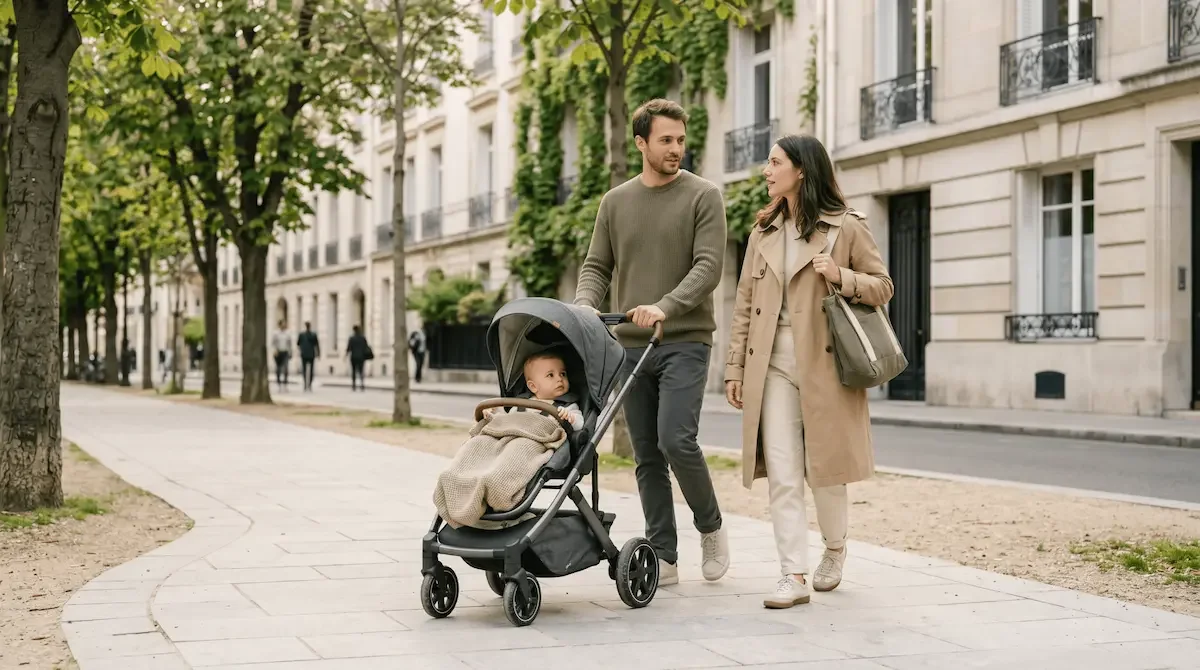
Town is where the lightweight stroller really comes into its own: narrow pavements, cramped shops, buses and trams. Rules vary from one network to another. In Paris, for example:
- on RATP buses, a maximum of two unfolded strollers is allowed on a standard or articulated bus, only one on a minibus;
- with a folded stroller you board by the front door; with an unfolded one, by the middle door, with the driver’s agreement;
- on the metro, strollers are allowed, preferably folded.
A stroller that folds with one hand and stands on its own really changes life at those moments. Check the rules of your own network. Our article lightweight stroller in the city and on public transport gives more pointers, from stairs to broken lifts.
Car, train and plane
In the car, the folded size matters more than the weight. At 25 cm thick once folded, the Urbino slips upright or flat into most boots. Still measure yours, especially on a small hatchback, with our boot and cabin calculator.
On the train, a folded lightweight stroller fits more easily in the luggage areas. Check your operator’s conditions.
On a plane, beware of promises: folded, the Urbino measures 62 x 53 x 25 cm, beyond the usual cabin bag size (55 x 35 x 25 cm at Air France, for example). It will not travel in the overhead locker above your seat. Many airlines let you keep a lightweight stroller up to the aircraft door, then put it in the hold: Transavia accepts this for strollers under 10 kg. Air France carries one folding stroller per child under 7 free of charge in the hold, according to its published conditions. Rules change: reread your airline’s before every trip. All our advice in travelling with a lightweight stroller.
Safety: the right habits
The French consumer safety authority (DGCCRF) recommends checking the parts that take the most strain: folding, braking and locking mechanisms, harnesses and belts, and wheels. It also advises following the manufacturer’s instructions to the letter, never modifying a childcare product, and never repairing a worn part yourself: that is the job of the manufacturer’s after-sales service.
- Check the stroller is properly locked open before putting the child in.
- Always strap the child in with the harness, even for a few metres.
- Apply the brake at every stop, even on ground that looks flat.
- Do not hang a heavy bag on the handlebar: the stroller can tip backwards.
- Never leave the child unattended in the stroller.
- Respect the child’s maximum weight and the basket load.
To go further, read our guide to lightweight stroller safety, which also explains the EN 1888 standards.
Care: the gestures that matter
A lightweight stroller lives outdoors: sand, rain, crumbs, pavement dust. A few simple gestures extend its life and preserve its safety.
- After every outing in the rain: wipe the frame and let the stroller dry open, canopy out, before folding it.
- Every week: empty the basket, brush the seat, remove sand and grit from the wheels.
- Every month: check the brake, the harness, the wheels and the folding joints.
- Fabrics: Chicco states the Urbino’s fabric is hand-washable; follow the label and the instructions.
Details in our guide to lightweight stroller cleaning and care.
Mistakes to avoid
- Buying a “from 6 months” umbrella stroller for a newborn, planning to prop them up “nicely with a cushion”.
- Covering the stroller with a cloth to protect it from the sun.
- Forgetting to measure the boot before buying.
- Believing a water-repellent canopy replaces a rain cover.
- Hanging the changing bag on the handlebar, at the risk of tipping the stroller.
- Folding the stroller wet and leaving it like that in the boot.
- Counting on the plane cabin without checking the sizes your airline accepts.
- Skipping the brake during a stop “of a few seconds”.
Who it is for, and who it is not for
The Urbino is for you if…
- you want a single light stroller from birth
- you live in town and take the bus or the metro
- you have a small boot or little space at home
- you fold it often, sometimes with the child in your arms
- you want a generous canopy against the sun
Look elsewhere if…
- you want to click an infant car seat onto the stroller
- you are well over 1.85 m tall and push for long periods
- you mostly walk on dirt tracks or in the woods
- you want a stroller that goes in the plane cabin
- you need a big basket for the shopping
Buying on Amazon: what to check
On Amazon, the same stroller can be offered in several colours, by several sellers, with different accessories. Before ordering:
- The exact model: “Urbino” and not another Chicco stroller with a similar name.
- The colour and its availability.
- What is in the box: bumper bar, basket, any rain cover.
- The seller: Amazon or a third-party seller, and their returns policy.
- Your rights: in the UK, an online purchase from a trader generally comes with 14 days to cancel, and goods must meet the Consumer Rights Act requirements.
Our editorial method
This guide is based on Chicco’s documentation, specialist retailers’ listings, the EN 1888 standards, the recommendations of the French consumer safety authority (DGCCRF), French and Quebec health authorities, and the rules published by transport operators and airlines. We have not tested the stroller in a laboratory: the figures quoted are the manufacturer’s, unless stated otherwise. Parents’ feedback is summarised as trends, without quotes or names. Full details on our affiliate disclosure page.
Frequently asked questions
What is the difference between an umbrella stroller and a compact stroller?
The historic umbrella stroller folds lengthwise and aims for maximum lightness; the compact stroller folds into a small package and often adds more comfort. Today the two terms largely overlap: look at the minimum age, the weight and the folded size rather than the name.
Can a lightweight stroller be used from birth?
Yes, if it is approved for that age and its backrest reclines almost flat. Many classic umbrella strollers are only suitable from 6 months: check the instructions.
How much does the Chicco Urbino weigh?
6.3 kg according to Chicco, for the stroller alone.
Up to what age can the Urbino be used?
Chicco states it from birth to 22 kg, which corresponds to about 4 years. The child’s weight is what counts.
Does the Urbino really fold with one hand?
That is what Chicco states, and several parents confirm they can fold it while holding the child. Once folded, it stands on its own.
What are its folded dimensions?
62 x 53 x 25 cm according to Chicco. Open, it measures 80 x 53 x 103 cm.
Can you take the Urbino into the plane cabin?
Folded, it exceeds the usual cabin bag size. In general, the airline takes it at the aircraft door or in the hold. Check your airline’s rules.
Is a rain cover supplied?
The specialist retailers we checked do not list one. The canopy is water-repellent, not waterproof. Check the contents shown on the offer.
Can you fit an infant car seat to it?
No. For the US version, Chicco states that the Urbino does not accept an infant car seat. If this is essential for you, look at a travel system.
Is the handlebar height-adjustable?
No. For the US version, Chicco gives a fixed height of about 102 cm. Very tall parents should try it.
Does the Urbino have a brake?
Yes, a foot brake, according to retailers’ listings. Apply it at every stop.
Can it go on paths?
On park paths and firm tracks, yes, with the front wheels locked. On sand or deep snow, small wheels soon reach their limits.
How do I protect my baby from the sun in a stroller?
Look for shade, open the canopy, avoid noon to 4 pm and cover the skin. Never cover the stroller with a cloth: the heat builds up quickly underneath.
Is a lightweight stroller enough as your only stroller?
For many city families, yes, if it is approved from birth. If you drive a lot with a newborn or walk on tracks, a travel system may suit the first months better.
How do I clean the stroller?
Wipe the frame with a damp cloth, brush the seat, and hand-wash the fabrics according to the label. Always let it dry open.
Nursery, market, weekend at grandma’s.
The moments when a lightweight stroller really makes sense.
Technical specifications.
- ApprovalFrom birth to 22 kg (about 4 years)
- Weight6.3 kg
- Open80 x 53 x 103 cm
- Folded62 x 53 x 25 cm
- FoldOne hand, self-standing
- BackrestFully reclining, one-hand adjustment
- WheelsSuspension, ball bearings, lockable front wheels
- CanopyExtendable, UV 50+, water-repellent
- Harness5-point, padded shoulder straps
Chicco data (Urbino product page) and retailer listings for the harness. Details and sources in our full specifications.
Chicco Urbino stroller
- Lightness★★★★★
- Fold★★★★★
- Baby comfort★★★★★
- Manoeuvrability★★★★★
- Equipment★★★★★
- Value for money★★★★★
The Chicco Urbino stroller is aimed at parents who want a single light stroller for the city, the car and weekends, usable from birth.
It is not for everyone: with no car seat compatibility and no adjustable handlebar, it does not replace a travel system for parents who want to move a sleeping newborn from the car to a walk. Our detailed opinion explains who it is for, and who it is not for.
Why it is our top pick
- Approved from birth thanks to a fully reclining backrest: one light stroller from the maternity ward to about 4 years.
- 6.3 kg and a one-hand fold, child in the other arm, with a stroller that stands on its own once folded.
- The bumper bar doubles as a carry handle: handy for stairs or putting it in a boot.
- Shock absorbers and ball bearings that make the ride smoother on pavements and paths.
- An extendable UV 50+, water-repellent canopy, more generous than on many classic umbrella strollers.
- A folded package only 25 cm thick, easy to fit in a boot, a cupboard or a narrow hallway.
Limitations
- The handlebar is not height-adjustable: very tall parents may find it low.
- Folded, it exceeds the usual cabin bag size: on a plane, plan for the hold or gate delivery.
- A rain cover is not listed among the accessories by the retailers we checked: buy one separately if needed.
- No infant car seat compatibility, and a seat some parents find shallow.
Our guides to go further.
Choosing, going out in every season, travelling, cleaning and riding safely: each guide explores one topic in depth, with practical advice and sources.
Is the Urbino right for your child?
A quick check against the limits stated by Chicco: from birth to 22 kg.
From birth, 6.3 kg, one-hand fold and UV 50+ canopy: a lightweight stroller for everything, from nursery runs to holidays.
- 0-22 kg
- 6.3 kg
- 1 hand
Ready for the first walks?
From birth · 6.3 kg · One-hand fold · UV 50+ canopy. Price and colours change often on Amazon: check them, as well as the seller and the accessories included (a rain cover is not always supplied), before you order.
Check the price on AmazonAffiliate link · new tab