Lightweight stroller care: the complete guide
A lightweight stroller lives outdoors: rain, sand, crumbs, dust. Well cared for, it stays safe, rolls better and lasts for several children. Here are the things to do after every outing, every week, every month and every season.
Contents
The manual first: every stroller has its own care instructions, especially for washing fabrics. If this guide and your stroller's manual differ, follow the manual. The French consumer safety authority (DGCCRF) points out that you should never repair a worn or damaged part of a childcare product yourself: contact the manufacturer's customer service.
Why look after your stroller
A lightweight stroller works much harder than you might think. It covers several kilometres a week, folds and unfolds hundreds of times, goes out in the rain, through sand and pavement dust. It carries a child who spills fruit purée, sticks biscuits to the armrest and grows every month. All this eventually shows: squeaky wheels, a sticking brake, stained fabric, a fold that resists.
Care has three goals. The first is safety: a clogged brake brakes less well, a harness buckle full of sand closes badly, a seized fold may not lock properly. The second is comfort: a clean stroller rolls more smoothly, folds more easily and stays pleasant for your child. The third is lifespan: a well-kept stroller serves a second child, can be lent or sold.
The good news: the essentials come down to a few simple actions, spread over time.
What wears on a stroller
| Part | Role | What wears it |
|---|---|---|
| Wheels | Rolling, manoeuvrability | Sand, gravel, hair, kerbs |
| Front wheel swivels | Steering | Dust, sand, damp |
| Brake | Holding the stroller still | Mud, sand, knocks |
| Folding joints | Folding, unfolding, locking | Dust, damp, repeated effort |
| Harness and buckle | Holding your child | Crumbs, sand, rubbing |
| Seat fabrics | Comfort | Stains, UV, rubbing |
| Canopy | Protection from sun, wind, light rain | Repeated folding, sun, damp |
| Handles and handlebar | Grip | Hands, sweat, rubbing |
| Basket | Storage | Overloading, scraping the ground |
The French consumer safety authority lists among the most heavily used parts of a childcare product the folding, braking and locking mechanisms, harnesses and belts, and stroller wheels. These are also the ones that need the most attention in care.
The care schedule
| Frequency | Tasks | Time |
|---|---|---|
| After every wet or dirty outing | Wipe the frame, remove mud or sand, let it dry open | 2 to 5 min |
| Every week | Empty the basket, brush the seat, remove crumbs from the buckle, inspect the wheels | 5 to 10 min |
| Every month | Check the brake, fold, harness and wheel play; clean the swivels | 15 min |
| Every season | Wash the fabrics per the manual, full inspection, check the canopy | 1 hour, plus drying |
These frequencies apply to daily use in the city. A stroller that goes out twice a week can have checks spaced out; one used at the beach or on tracks needs more attention.
Before you start
- Take your child out and empty the basket.
- Unfold the stroller on a flat surface and apply the brake.
- Keep children away from the folding joints.
- Have the manual to hand, or its downloaded version from the manufacturer's website.
Cleaning the frame
The frame is simple to clean: a damp microfibre cloth, perhaps with a little mild soap, then a dry cloth. Focus on the handlebar, which hands make dirty, and the lower parts, which catch mud and puddle water. Do not use a pressure washer: it forces water and dirt into the joints and bearings.
Dry the metal parts well, especially the joints and screws, to prevent corrosion. A stroller that stays damp eventually rusts where you cannot see.
Washing the fabrics
This is where the manual matters most. Some stroller fabrics are machine washable, others hand wash only; some come off entirely, others partly. Chicco states that the Urbino's fabric is hand washable.
- Brush dry to remove crumbs, sand and hair.
- Vacuum the seams and corners with a narrow nozzle.
- Treat stains as they happen, with lukewarm water and mild soap, dabbing rather than rubbing.
- Wash according to the label: by hand in lukewarm water with mild soap if that is what it says.
- Rinse thoroughly so no soap is left, as it attracts dirt.
- Dry flat or hanging, in the shade, away from direct heat that could distort the padding.
- Refit the fabrics following the manual, checking that the harness straps go through the right slots.
This last point is essential: a harness refitted incorrectly no longer holds your child properly. Take photos before removing the fabrics to help you put them back.
The canopy
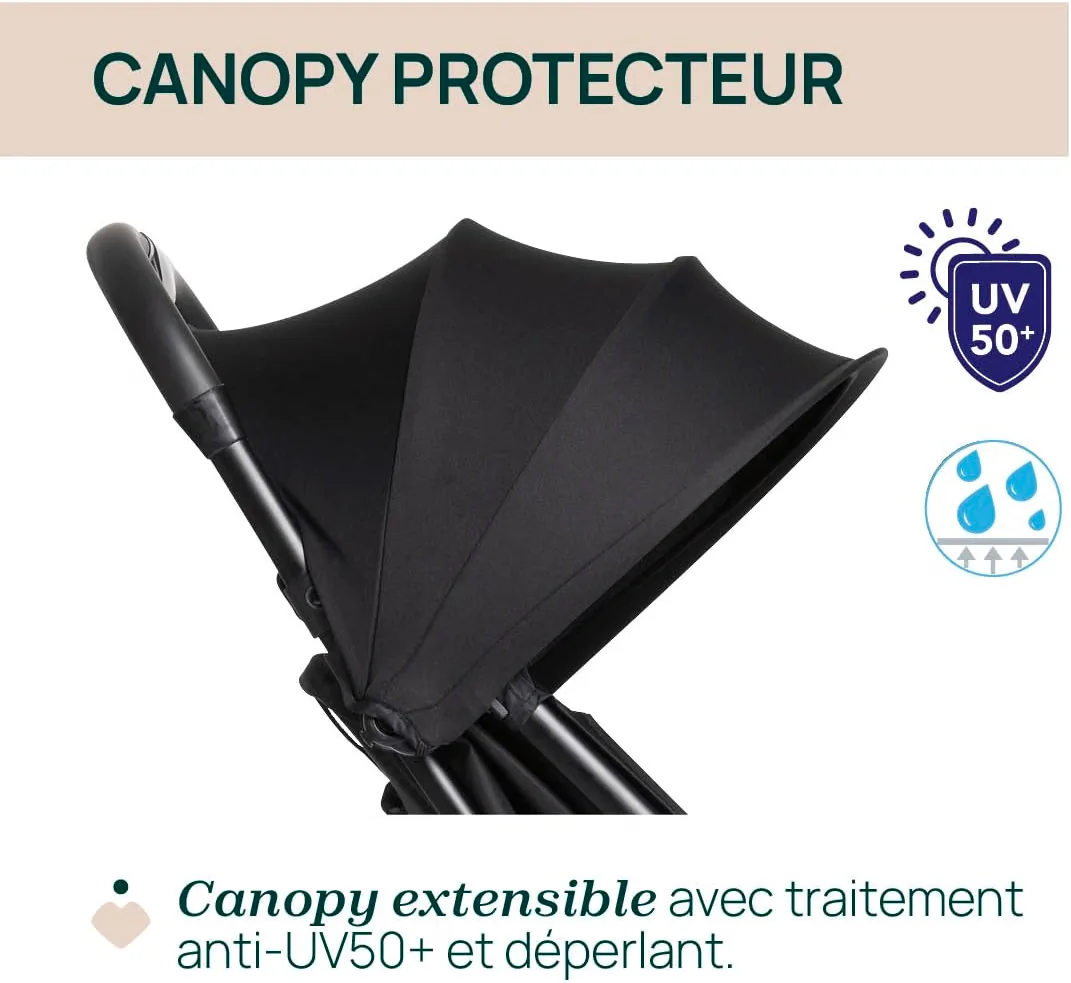
The canopy faces sun, rain and repeated folding. Brush it regularly, clean it with a damp sponge, and always let it dry extended. A canopy folded damp picks up smells and can go mouldy. Do not machine wash it unless the manual says so: the water-repellent and UV treatment can be damaged by harsh washing.
Check the canopy's ribs and fixings from time to time: a broken fixing lets the canopy drop onto your child or fold back in the wind.
The wheels
The wheels are the parts that get dirtiest. Every week, take a look:
- Remove hair, threads and grass wrapped around the axles: they slow the wheel and make it squeak.
- Remove sand and grit stuck in the treads and swivels.
- Check for play: a wheel should not have excessive side-to-side movement.
- Check the front swivels: they should turn freely and lock firmly when you lock the direction.
If the wheels are removable, take them off once a month to clean the axles with a dry cloth. Only lubricate with the product and in the places stated in the manual, when it says to: an unsuitable lubricant attracts dust and sand.
The brake
The brake is the most used safety feature. Test it every month on a slight slope: apply it and push the stroller gently. It should not move, even by a few centimetres. If it slips, clean the mechanism (mud, sand, hair) and try again. If the problem persists, do not use the stroller on a slope and contact customer service.
The folding mechanism
A fold that resists, squeaks or no longer locks firmly should alert you. The most frequent causes are dust, sand and damp in the joints. Clean the joints with a dry cloth and a soft brush, then test folding and unfolding several times.
After every unfold, check the lock: press firmly on the handlebar, nothing should give. If the lock no longer engages properly, do not use it with your child and contact the manufacturer. A frame that is not properly locked can fold.
The harness and buckle
The harness buckle collects crumbs, sand and fruit purée. A clogged buckle closes badly or is hard to open. Clean it in lukewarm water, working the mechanism several times, then let it dry completely before use. Inspect the straps: fraying, failing stitching or slipping adjusters are signs of wear. A damaged strap should be replaced with an original part, via customer service.
After rain
- Wipe the frame, especially the joints and wheels.
- Remove the rain cover and let it dry separately.
- Let the stroller dry open, canopy extended, somewhere airy.
- Only fold it once dry, and never put it wet in a closed boot.
After the beach
Sand and salt are a stroller's worst enemies. After a beach trip, shake and brush the seat, rinse the wheels and lower frame with fresh water, without a strong jet, then dry carefully. Work the fold and brake several times to dislodge remaining grains.
After snow and road salt
Road salt damages metal and bearings. After walking on salted pavements, wipe the wheels and lower frame with lukewarm water, then dry. Let the stroller thaw and dry at room temperature, not pressed against a radiator.
Common stains
| Stain | Gentle method |
|---|---|
| Fruit purée, food | Remove the excess, dab with soapy lukewarm water |
| Milk | Cold water first, then mild soap |
| Mud | Let it dry, brush, then dab |
| Sun cream | Mild soap, careful rinsing |
| Chocolate | Cold water, mild soap |
Always test a product on a hidden area. Avoid bleach, harsh stain removers and solvents, which fade and weaken fabrics.
Diagnosing a noise
| Noise | Likely cause | What to do |
|---|---|---|
| Squeaking wheels | Hair or sand on the axle | Remove the wheel if possible, clean |
| Clattering on every cobble | Wobbling front wheel | Clean the swivel, check the lock |
| Cracking when folding | Sand in a joint | Brush, fold several times |
| Constant rubbing | Basket or fabric touching a wheel | Reposition, lighten the basket |
| Metallic noise | Loose or broken part | Stop using it, contact customer service |
Common faults
- The fold no longer locks: clean the joints; if the problem persists, stop using the stroller and contact the manufacturer.
- The brake no longer holds: clean the mechanism; if the stroller still slips, contact customer service.
- A wheel no longer turns: remove whatever is blocking the axle; if the wheel is cracked, replace it with an original part.
- The buckle no longer closes: clean it; if it still fails, have it replaced.
- The backrest no longer holds its position: check the strap or notch; a worn strap can be replaced.
Storing the stroller
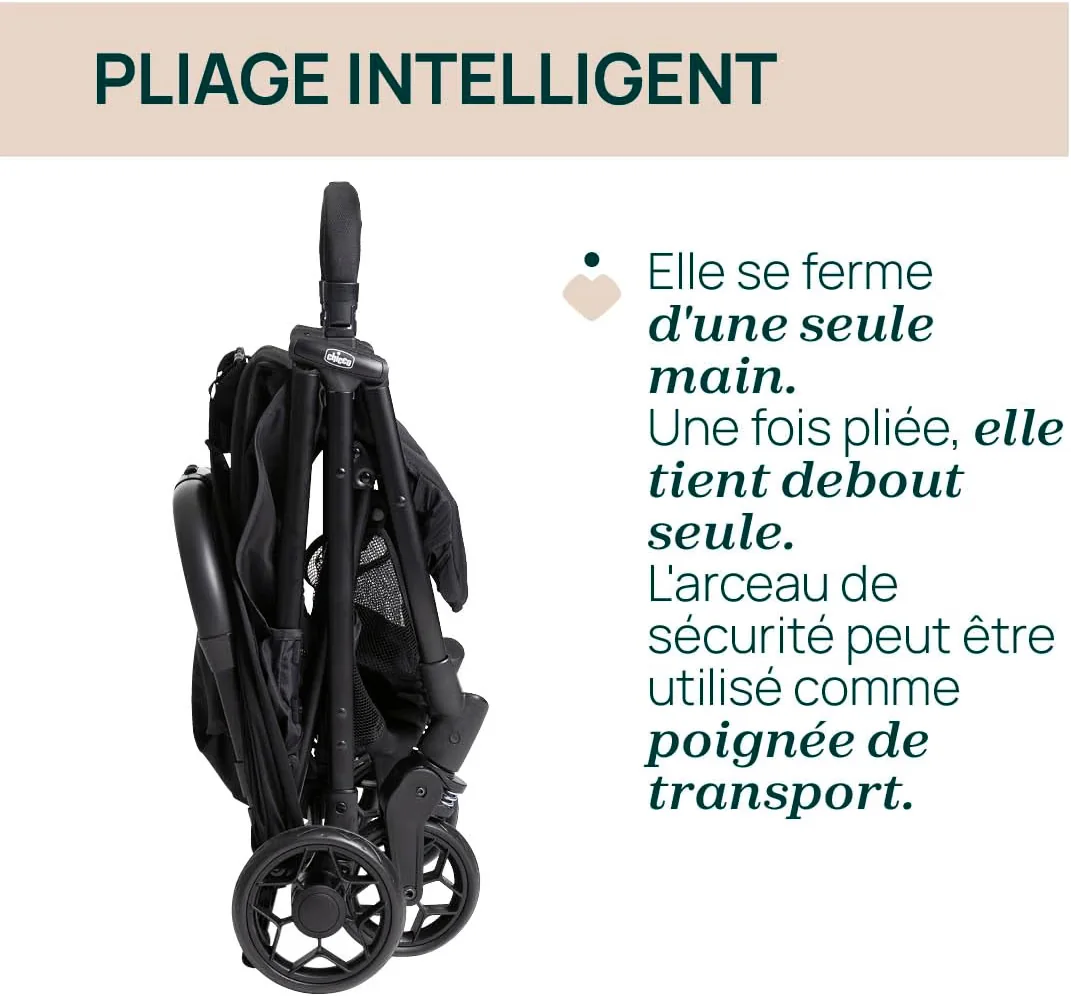
Store the stroller dry, somewhere dry and airy, out of direct sunlight. A self-standing stroller, like the Urbino, stands upright folded in a corner; do not put anything heavy on it. In a damp cellar or garage, protect it with a breathable cover, not a sealed plastic bag that traps moisture.
Between children
If the stroller is going to wait several months, clean it thoroughly, wash the fabrics per the manual, let everything dry, then store it folded in a breathable cover, somewhere dry. Before using it again, do a full inspection: fold, lock, brake, harness, wheels, canopy. Also check for any product recalls on the brand's website, on the EU Safety Gate portal and with your national product safety authority.
Products to avoid
- bleach and harsh stain removers, which fade and weaken;
- solvents and strong alcohol, which attack plastics and coatings;
- greasy lubricants not specified in the manual, which attract sand;
- pressure washers, which force water into the mechanisms;
- tumble dryers for the fabrics, unless the label says otherwise.
The care kit
- two microfibre cloths, one damp and one dry;
- a soft brush and an old toothbrush for corners;
- mild soap;
- a vacuum cleaner with a narrow nozzle;
- round-ended scissors for hair wrapped around axles;
- a breathable cover for long-term storage.
When to call customer service
Contact the manufacturer or seller, without taking the stroller apart, if:
- the frame no longer locks properly;
- the brake no longer holds after cleaning;
- a frame part is cracked or bent;
- a harness strap or buckle is damaged;
- a wheel is broken.
Describe the problem precisely, attach photos and keep your proof of purchase. For a purchase from a business, your statutory rights under the Consumer Rights Act may apply. The French consumer safety authority advises against DIY repairs: a makeshift fix can create a hazard.
Preparing to sell or give away
A clean, complete stroller sells better and can be passed on with confidence. Clean it, wash the fabrics, do the full inspection, and include the manual or the address to download it. Mention known faults honestly. For the buyer, the French consumer safety authority recommends checking the soundness of the most heavily used parts: make it easy by demonstrating the fold, brake and harness.
Good habits from day one
Care starts the day the stroller arrives. Even before the first outing, take a few minutes to lay good foundations. Check that all the parts listed in the manual are present and intact. Assemble the stroller following the manual, then fold and unfold it several times to feel the mechanism when it is new: you will later recognise a fold that resists. Test the brake, the front wheel lock, and the backrest and harness adjustments.
Note the exact model reference, the colour, the purchase date, the seller and the serial number on the label. Keep the proof of purchase and the manual in a folder, or photograph them. You will be asked for this information in case of a claim, a spare parts request or a product recall check.
Finally, if you can, apply one simple rule from the start: the stroller comes home dry and empty. This single habit avoids most problems with smells, ingrained stains and corrosion.
Adapting care to use
The schedule above suits daily use in the city. Adjust it to your situation:
| Use | Adjustment |
|---|---|
| A few outings a week | Monthly check every two months, clean after each dirty outing |
| Daily use in the city | Standard schedule |
| Tracks, gravel park paths | Wheels and swivels cleaned every week |
| Seaside, beach | Fresh-water rinse after every outing, careful drying |
| Winter with road salt | Wipe the lower frame after every outing |
| Shared stroller (nursery, grandparents) | More frequent brake and fold checks, manual passed on |
A stroller that travels by plane also deserves an inspection every time it comes out of the hold: knocks can bend a part or loosen a fixing without it being obvious at first glance.
Caring for accessories
Accessories need care too. The rain cover is rinsed in clean water, dried unfolded and stored clean and dry, otherwise it stains and smells. The footmuff is washed according to its label, often in the machine, and dried completely before use. The parasol is folded dry and its clips checked so it does not fall onto your child. The travel bag is shaken out and cleaned after every trip. The bumper bar and its cover are cleaned regularly: it is often the first thing a child chews.
Hygiene: what really matters
A stroller does not need to be sterile. What matters is regularly removing food remains, which attract insects and encourage mould, washing the surfaces your child touches and puts in their mouth, such as the bumper bar and shoulder straps, and drying fabrics well. Mild soap and water are enough in the vast majority of cases. Strong disinfectants are not needed day to day and can damage fabrics or leave residues on surfaces your child touches. After a tummy bug or vomiting, wash the affected fabrics according to the label and let them dry completely.
Signs a stroller is ageing
Even well cared for, a stroller wears. Some signs should alert you:
- a fold that takes ever more effort or a lock that engages badly;
- a brake that lets the stroller slip despite cleaning;
- wheels with play or that are deforming;
- frayed straps, a buckle that opens on its own;
- cracks in plastic frame parts;
- a canopy whose ribs no longer hold.
None of these signs necessarily means changing the stroller: many parts can be replaced. But for safety parts, go through customer service rather than a makeshift repair.
Keeping a small log
Noting important interventions in two lines may seem excessive. It is useful the day you have to contact the seller or sell the stroller. Note the purchase date, reference, serial number, full washes, parts changed and incidents (noise, sticking, a knock in the hold), with a photo if needed. A note on your phone is enough. This record lets you describe a problem precisely to customer service and reassures a future buyer.
A stroller left at nursery
A stroller that spends its days in a nursery or school store wears differently. It is often folded and unfolded by other people, stored tightly against other strollers, sometimes knocked. Check the fold and brake more often, remove things forgotten in the basket and wipe the wheels if the store is dusty. A discreet label with your name under the seat avoids accidental swaps between identical models.
Seasonal tasks
Before summer, check the canopy, its ribs and fixings, clean the parasol and check it holds well. Wash the fabrics to remove winter residues. After summer, remove sand from all the joints and wheels, wash fabrics stained with sun cream and let them dry. Before winter, check the rain cover, the footmuff and the harness adjustments for thick clothing. After winter, carefully wipe off salt and mud and check for rust on screws and joints.
Spare parts and compatibility
When a part wears, whether a wheel, strap, buckle or canopy, choose an original part supplied by the manufacturer or seller. A generic part may look identical without offering the same strength, which is a problem for safety components. Always give the exact reference of your model and, if possible, the serial number on the label. Keep small original parts, such as end caps or clips, in a pouch with the manual.
How much time it really takes
Over a year, caring for a lightweight stroller used every day takes little time: a few minutes a week, a quarter of an hour a month and an hour each season, not counting drying. That is far less than the time lost to a fold that resists, a brake that sticks or a squeaky wheel, and far less than the cost of replacing a stroller too soon.
The trick is to fit these tasks into existing moments: a wipe on the way back from nursery, a brake check on Sundays, washing the fabrics when the clocks change. Once the routine is in place, it takes no particular effort, and the stroller stays safe and pleasant to the end of its use.
Care myths
A few habits are passed around as good advice when they actually shorten a stroller's life.
- "A good blast with the hose is the quickest way." Water under pressure goes into the joints and bearings and stays there. A damp cloth and careful drying are kinder to the mechanism.
- "A little oil stops every squeak." A general-purpose oil attracts sand and dust, which then grind the parts. Only lubricate if the manual says so, with the product it specifies, and remove hair first: it is the most common cause of squeaking.
- "Bleach is the only way to really clean." It fades and weakens fabrics and is not needed day to day. Mild soap and water are enough, with thorough rinsing.
- "A plastic bag protects it in the cellar." It traps moisture, which encourages mould and rust. A breathable cover is better.
Gentle, regular care beats occasional heavy cleaning.
The case of the Chicco Urbino
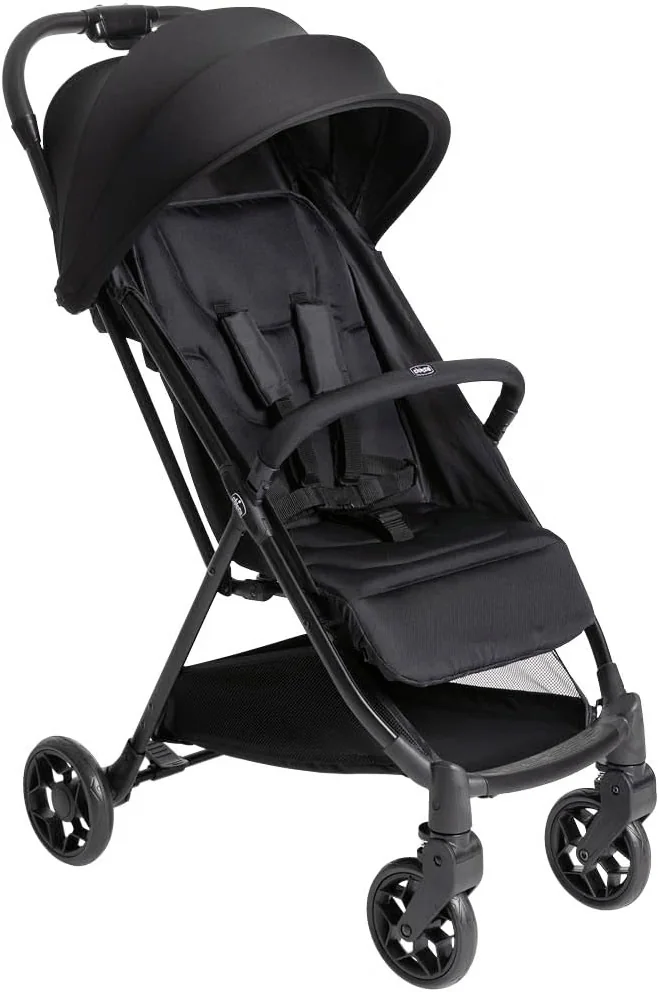
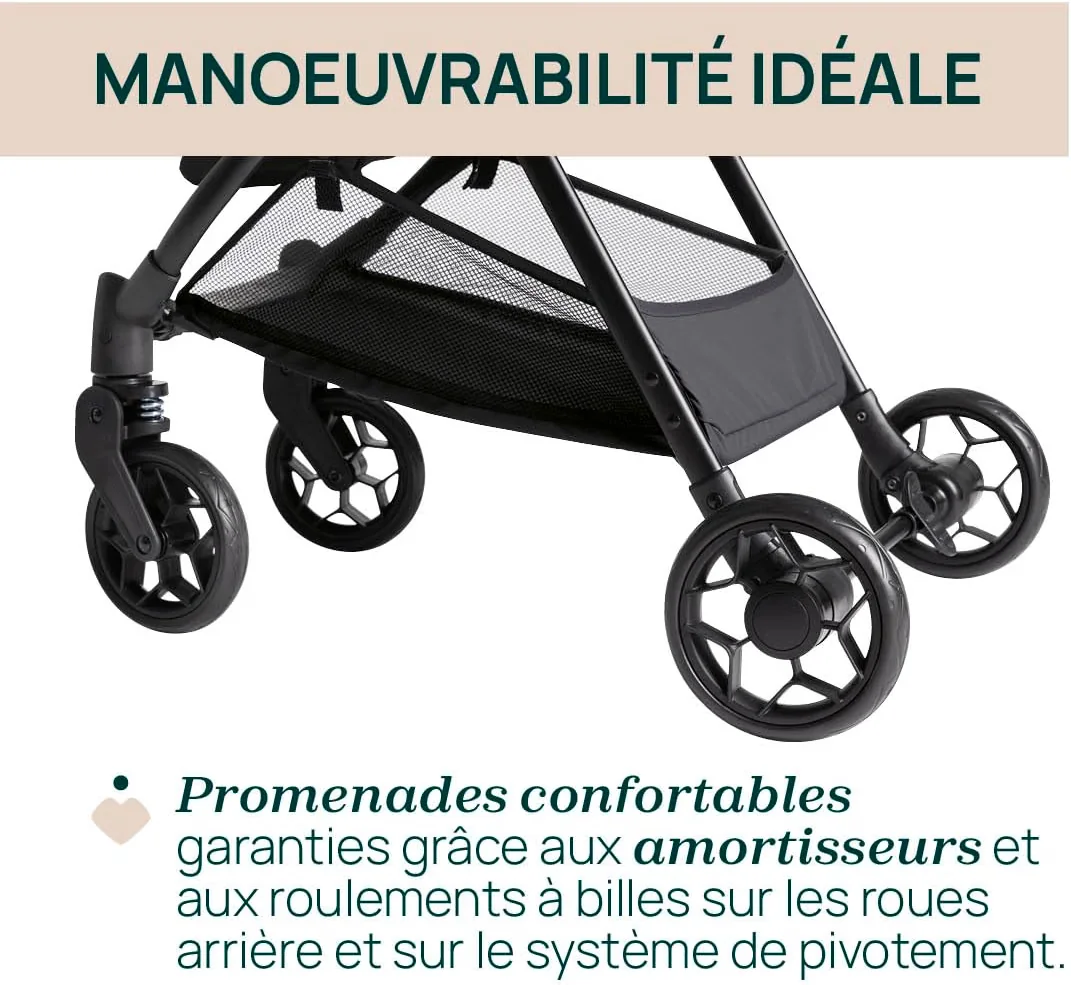
On the Urbino, care centres on a few points. Chicco states the fabric is hand washable: follow the label and air dry. The wheels, sprung and fitted with ball bearings at the rear and on the swivel, benefit from regular removal of sand and hair. The UPF 50+, water-repellent canopy should dry extended. The bumper bar, which doubles as a carry handle, deserves a regular wipe. Our user guide covers folding and adjustments.
Frequently asked questions
Can you machine wash a stroller?
The frame, never. The fabrics, only if the label allows it. For the Urbino, Chicco states hand washing.
How do you get rid of a musty smell?
Wash the fabrics per the manual, air dry them in the shade, then store the stroller somewhere dry, never folded damp.
Should you grease the wheels?
Only if the manual says so, with the product it specifies. An unsuitable lubricant attracts sand.
What if the stroller squeaks?
Remove hair and sand from the axles and joints, then test. If the noise is metallic or persistent, contact customer service.
How long does a lightweight stroller last?
It depends on use and care. Well kept, a stroller can serve several children, provided you check the fold, brake, harness and wheels before each new use.
Can you repair a broken part yourself?
The French consumer safety authority advises against it: contact the manufacturer's customer service for safety parts.
Should you disinfect the stroller?
Day to day, cleaning with water and mild soap is enough. Wash above all the bumper bar and shoulder straps, which your child touches and puts in their mouth.
What should you check after a flight?
The fold, lock, brake and wheels, as soon as you arrive. Report any damage to the airline before leaving the airport.
How do you care for the rain cover?
Rinse it in clean water, dry it unfolded and store it dry. Never fold it damp, or it will smell.
Can you keep the stroller in a garage?
Yes if it is dry. Protect it with a breathable cover, never a sealed plastic bag that traps moisture.
How do you prevent rust?
Dry the frame and joints after rain or snow, rinse off salt and sand, and store the stroller somewhere dry.
Do you need to remove the wheels to clean them?
If they are removable according to the manual, once a month is enough to clean the axles. Otherwise, remove hair and sand by hand and with a brush.
Does sunlight damage the stroller?
Prolonged exposure fades fabrics and ages plastics. Store it out of direct sunlight.
How often should you wash the fabrics?
About once a season in full, treating stains straight away in between. More often with heavy use or after illness, always according to the label.
What if the wheels wobble?
Clean the swivels and check the lock. If they still wobble, a part may be worn: contact customer service.
Can the stroller stay in the car in winter?
Yes, as long as it is dry. After driving on salted roads, wipe the wheels and frame rather than leaving salt on them.
How do you remove chewing gum from the fabric?
Harden it with an ice cube in a bag, then lift it off gently. Treat any residue with mild soap.
Ready for the first walks?
From birth · 6.3 kg · One-hand fold · UV 50+ canopy. Price and colours change often on Amazon: check them, as well as the seller and the accessories included (a rain cover is not always supplied), before you order.
Check the price on AmazonAffiliate link · new tab